Churchill Solitaire Card Game
- 3.5
- Rating
- 10.00K
- Installs
- Free
- Price
 Analysis by App-foxy
I went into Churchill Solitaire expecting a familiar patience game with a historical coat of paint, but its identity is more focused than that. This is a free card game from WSC Solitaire, LLC, built around a demanding variation of solitaire associated with Winston Churchill. The central appeal is not a large collection of modes or a busy social layer; it is the feeling of sitting down with one difficult layout and trying to read it more intelligently than you did the last time.
That distinction matters. If you want a quick, relaxing game that almost plays itself, this may feel severe. If you enjoy card puzzles where an apparently harmless move can ruin the rest of a deal, it has a much stronger personality than ordinary solitaire. I found the experience most enjoyable when I treated each round as a small exercise in planning rather than as background entertainment. The presentation supports that attitude with a restrained, old-fashioned mood, while the rules create the real tension.
A stern first impression that quickly becomes personal
The first thing I noticed was how quickly the game gets to its main idea. There is no need to learn a long campaign or understand a complicated collection system before playing. You are presented with a solitaire challenge that looks recognizable at first, yet asks for more careful attention because the arrangement gives you less room for careless decisions. The familiar card-table structure makes the entry point approachable, but the difficulty soon separates it from the gentler solitaire games many people keep on their phones.
You May Also Like

 Pandora - Music & Podcasts
Pandora’s Music Is Easy to Start, but Harder to Recover
Pandora’s strength is its low-effort path from a seed to a station. Its weak spot is how much confidence it asks you to place in connection, setup, and quiet recovery.

 AccuWeather: Weather Radar
AccuWeather Review: A Quick, Clear Forecast for Everyday Decisions
For everyday plans, the best forecast is the one you can understand quickly. AccuWeather makes rain timing, radar, and local conditions easy to act on, with a few trade-offs.

 Hill Climb Racing
Why Hill Climb Racing Still Turns Crashes Into One More Run
A tiny car, a bumpy hill and one more upgrade: Hill Climb Racing keeps resurfacing because its simple chaos makes every near-miss feel personal.

 AliExpress - Shopping App
AliExpress Makes Global Shopping Feel Personal, but Shoppers Bear the Risk
AliExpress turns a global marketplace into a pocket-sized discovery engine. Its reach is useful, its shopping loop compelling, and its trade-offs easy to miss.

 Lords Mobile: Kingdom Wars
Lords Mobile Is a Kingdom-Building Routine, Not a Quick Match
A case-by-case verdict on the building, battles, device demands, and social commitments that make Lords Mobile rewarding for some players and exhausting for others.

 PDF Scanner app - TapScanner
TapScanner Makes Paperwork Easier to Capture, Check, and Share
TapScanner makes scanning with a phone feel less like a rescue operation and more like a dependable step in getting work done. Its capture tools are useful, though not flawless.
More From Our News Desk
View All News


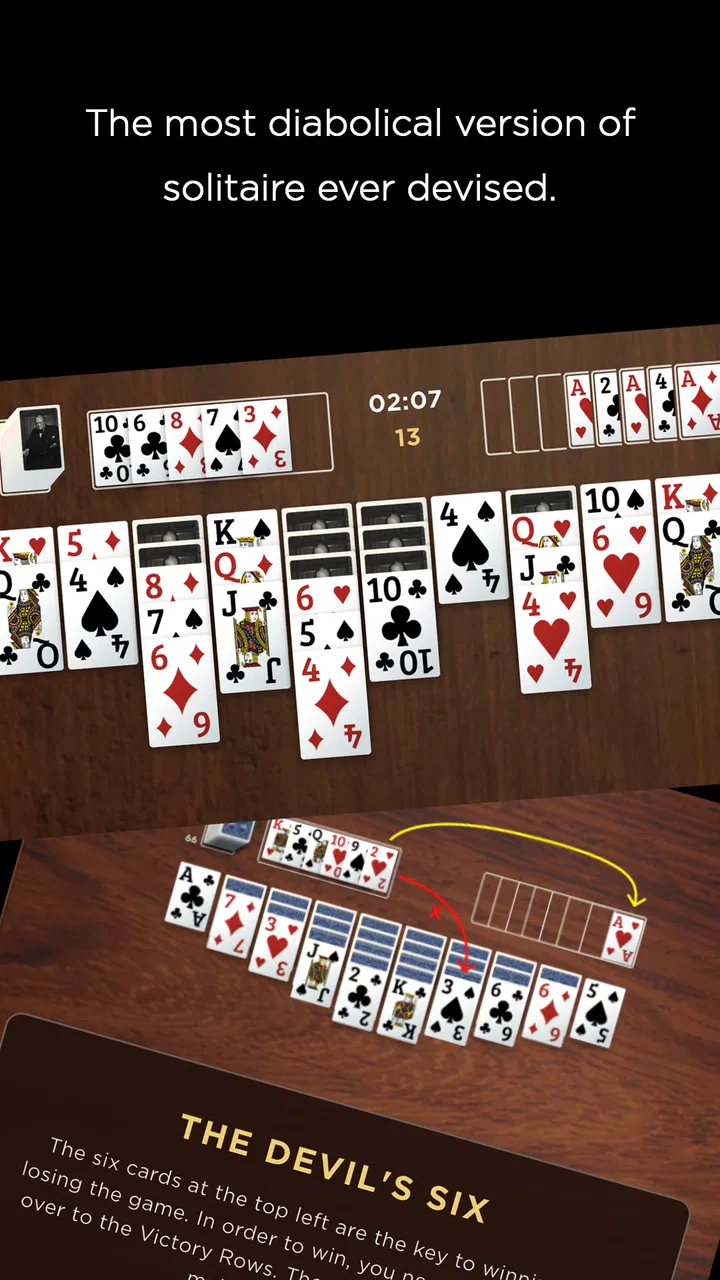
The store summary calls it the most diabolical version of solitaire ever devised, played by Winston himself. I would not take that as a literal difficulty guarantee, but it does describe the attitude of the game well. The design wants you to respect the deal. I often found myself making a move that seemed useful immediately, only to realize that I had blocked a more important card or spent a needed option too early. That kind of setback feels fair when you can identify the mistake, although it can be frustrating when you are looking for a purely casual diversion.
The game is free to download, which makes it easy to try without committing money at the start. Optional purchases range from $0.99 to $29.99 per item, so I would recommend deciding early whether you are comfortable with the way optional spending is presented before investing a lot of time. The free entry is valuable because the rules are unusual enough that a short hands-on test tells you more than a description ever could.
Its age rating is Everyone 10+, and the tone is much closer to a historical card table than to an action game. There is no need to approach it as a children’s title simply because the cards are easy to understand. The challenge comes from judgment, sequencing, and patience. For an adult who likes quiet games, that creates a pleasant contrast with the louder, reward-heavy style common in mobile entertainment.
Why the opening minutes can mislead you
At first glance, I thought the game would fit neatly into the same pocket as standard Klondike solitaire. That comparison is useful, but incomplete. The Churchill variation changes how I value every visible card. In ordinary solitaire, I can sometimes rely on familiar habits: expose hidden cards, build sequences, and keep the foundations moving. Here, those instincts still help, yet they do not solve the deeper problem of managing limited access and avoiding dead ends.
That makes the first few rounds educational in a quiet way. I had to stop asking, “What can I move now?” and start asking, “Which move gives me the best future?” That is one of the game’s strongest qualities. It turns a simple card layout into a planning problem without burying the player in rules. The downside is that a new player may interpret an early loss as bad luck rather than as a lesson in how the board wants to be read.
I suggest playing several rounds before judging the difficulty. A single failed deal can make the game seem unfair, especially if you are still learning which spaces or sequences deserve priority. After a few attempts, the frustration becomes more informative. You begin to recognize that the order of your actions matters as much as the cards available to you. That is the point where the game stops feeling like a novelty and starts feeling like a serious card puzzle.
How the historical setting shapes the playable mood
The Winston Churchill theme is not just a label placed over a generic card game. It gives the experience a particular emotional direction: formal, deliberate, and slightly intimidating. I do not feel as though I am entering a colorful arcade. I feel as though the game is asking me to slow down and make decisions with consequences. That atmosphere works because the rules already demand restraint; the setting and the mechanics are pulling in the same direction.
The art direction is best understood as supportive rather than showy. The cards remain the practical center of the screen, which is exactly what I want from a game where visual clarity affects decision-making. The historical framing adds character without turning the table into an illustrated storybook. I appreciated that balance because excessive decoration would make it harder to inspect the layout, especially during a long session when I am comparing several possible moves.
There is also a useful contrast between the recognizable card symbols and the game’s stern personality. Suits, ranks, and sequences are immediately readable, but the surrounding mood tells me not to rush. That combination helps the title feel specific to Churchill Solitaire rather than interchangeable with a basic digital deck. The setting does not replace the need for good mechanics; it gives those mechanics a reason to feel measured and consequential.
One subtle strength is the way the theme changes my behavior. In a bright, reward-driven solitaire app, I am tempted to tap quickly and chase the next animation. Here, the historical tone makes me more willing to pause. That pause is not wasted time. It is where the actual game happens, because the best decision is often the one that preserves future choices instead of producing the most immediate progress.
When the atmosphere helps and when it may not
This mood will appeal to players who enjoy a focused, old-fashioned card-table feeling. It is a good match for a quiet evening, a commute with enough concentration to spare, or a short break when I want something mentally active without a complicated story. It also suits people who like historical flavor but do not need a full narrative campaign to justify it.
On the other hand, the theme may feel too restrained if you want expressive characters, bright environments, or constant visual rewards. Churchill is present as a framing idea, not as a talkative companion guiding every move. Players looking for a dramatic historical game should set their expectations accordingly. The setting gives the puzzle a voice, but the cards remain the main event.
The most important trade-off is that atmosphere and difficulty reinforce one another. Because the presentation feels serious, a failed round can feel more final than it would in a playful solitaire app. I eventually liked that honesty, but I can see why someone who plays only to relax might prefer a softer presentation and more forgiving rules.
Sound, pacing, and the value of a quiet round
Sound is not the reason I would recommend this game, but it contributes to the overall sense of occasion. The audio presentation stays subordinate to the cards, which is appropriate. I do not want a soundtrack competing with the layout while I am calculating whether a move will leave me trapped later. The result is a game that feels comfortable at a low volume, and that makes it easier to use in places where I do not want my phone to demand attention.
The pacing is similarly controlled. A round does not need to become a performance of rapid taps. I can examine the table, consider a sequence, and wait before committing. That pacing is one of the clearest differences from many mobile card games, where speed and constant feedback can become part of the reward loop. Here, hesitation is often a sign that I am playing properly rather than failing to engage.
I found this especially useful in an everyday situation: when I had a short break between tasks, I could begin a deal without needing to remember a story or rebuild a complex strategy from a previous session. If the break ended, the game’s central idea was still easy to return to. At the same time, I would not start a round while distracted by a conversation or a deadline, because the game punishes half-attention more than ordinary solitaire.
The pacing also affects replay value. A quick win is satisfying, but a loss can be valuable if it reveals a planning error. I sometimes replayed a layout mentally after closing the game, thinking about the moment when I committed a card too early. That is a more durable kind of engagement than simply collecting another reward, although it depends on enjoying self-correction.
How to play without turning every round into a guess
My most useful habit was to delay the first attractive move until I had scanned the whole visible arrangement. A card that opens a space can look automatically good, but the newly available space may be less important than a sequence you can preserve elsewhere. I also learned to distinguish between progress that changes the board and progress that merely changes its appearance. Moving a stack may feel productive while leaving the real blockage untouched.
Another practical tip is to treat exposed cards as information, not just as targets. Before building toward a foundation, I try to consider which cards I may need to uncover or relocate later. This reduces the number of impulsive moves and makes losses easier to understand. The game becomes less about finding one magical solution and more about protecting several possible routes until the layout reveals which route is strongest.
I also recommend using a failed round as a review exercise rather than immediately blaming the deal. Ask which decision first reduced your options. Was it an unnecessary foundation move, an early commitment of a sequence, or a failure to open the right area? That small post-round habit is one of the best ways to improve, and it is more useful here than simply playing faster.
Where the mechanics fit the presentation—and where they resist it
The rules and the mood generally complement each other. The game looks serious because the decisions are serious. Its card format is easy to recognize, but the Churchill variation asks for a different relationship with risk than standard solitaire. I cannot rely on routine alone. I have to weigh immediate access against future flexibility, and that makes every visible opportunity feel conditional.
Compared with a usual Klondike-style alternative, this is a better choice for someone who wants a more demanding puzzle and a stronger identity. Traditional solitaire is often ideal when I want familiar rules, quick comfort, and a broad range of forgiving decisions. Churchill Solitaire is more appealing when I want the card layout to resist me. The comparison is not about one game being universally better; it is about whether I want relaxation through repetition or satisfaction through careful problem-solving.
Compared with solitaire collections that offer many variants, this game has a narrower purpose. A collection is the better option if I want to switch between Spider, FreeCell, Klondike, and other formats in one sitting. Churchill Solitaire makes more sense when I specifically enjoy this variation and want the surrounding presentation to stay consistent. Its focus is a strength for specialists and a limitation for players who need variety.
The mechanics also explain why the average rating of 3.5 from around 2.1 thousand ratings feels understandable to me. The game has a distinct audience, but its difficulty and restrained pace will not suit everyone who downloads a free card title. A player expecting effortless wins may rate the experience poorly even if the design is doing exactly what it intends. The number of written reviews, around 731, suggests there is enough player reaction to show that the title produces mixed feelings rather than universal agreement.
Small decisions that make the biggest difference
One trade-off I kept noticing was between opening a new location and preserving a useful sequence. Opening cards is tempting because it creates visible change, but a sequence can represent future mobility. I now look for moves that improve both conditions at once. If a move opens access while keeping several ranks connected, it usually deserves more attention than a move that merely clears one card.
I also avoid treating the foundation as an automatic priority. Advancing a suit can be correct, but it can also remove a card that would have helped rearrange the table. That does not mean foundation progress is bad; it means I consider its cost before celebrating it. This is a non-obvious adjustment for players coming from more forgiving solitaire games, where sending a card upward often feels like an uncomplicated improvement.
Finally, I try to preserve uncertainty. When two moves appear equally useful, I prefer the one that leaves more kinds of follow-up available. That approach is especially helpful when I am unsure whether a deal can be solved. It does not guarantee success, but it prevents me from narrowing the board too early. In practice, that is what makes the game feel strategic instead of random.
Who should install it and who should choose another card game
I would recommend this game to anyone who likes solitaire but has started to find standard layouts too predictable. It is also a good fit for players who enjoy quiet concentration, historical framing, and puzzles that reward learning from mistakes. The free price makes experimenting easy, and the modest install footprint implied by its 10K+ installs suggests a smaller, more specialized audience than the giant mainstream card titles.
It is particularly suitable for short sessions where I want a clear mental task. I can play one round while waiting, but I do not feel pressured to maintain a long campaign or manage a large collection of unlocks. The game’s focused structure lets me return to the same kind of challenge repeatedly, which is useful for people who prefer depth within one ruleset over constant novelty.
I would skip it if my main goal is a very relaxing solitaire experience with frequent wins. I would also choose a broader collection if I want several card variants, or a more animated title if sound, spectacle, and reward effects are central to my enjoyment. Players who dislike replaying difficult deals or analyzing their own mistakes may find the same qualities I admire exhausting.
Device compatibility is straightforward for modern Android users: the current version is 2.3.09 and it requires Android 6.0 or later. That makes it accessible on a wide range of older supported devices, though the real question is not whether it runs but whether its deliberate style matches your habits. I would also keep the optional purchase range in mind before handing the phone to a child, despite the Everyone 10+ content rating.
A coherent card-table mood with a demanding center
After spending time with it, I see Churchill Solitaire as a specialized card game rather than a general-purpose solitaire replacement. Its best achievement is coherence. The historical framing encourages patience, the visual treatment keeps attention on the cards, the sound does not overwhelm the puzzle, and the pacing gives decisions room to matter. None of those elements would be enough alone, but together they create a recognizable atmosphere.
The limitations are equally clear. The game can be unforgiving, its narrow focus will not satisfy players seeking a catalog of variants, and the optional purchase range means “free” should not be confused with an entirely purchase-free experience. The rating of 3.5 reflects the fact that a demanding design can be rewarding for one player and irritating for another. I would not recommend it blindly to every solitaire fan.
My honest recommendation is to try it when you want a serious, thoughtful card puzzle rather than a passive time-killer. Give yourself enough rounds to learn why your first instincts fail, and judge it by the quality of the decisions it creates, not by how quickly it lets you win. For me, the Winston Churchill setting works because it turns a familiar deck into a more deliberate ritual. When I want quiet focus and a layout worth studying, this is the version I reach for; when I want variety or easy relaxation, I choose a different card game.
FAQs for Churchill Solitaire Card Game
01What is Churchill Solitaire Card Game?
Churchill Solitaire is a challenging single-player card game inspired by the version reportedly enjoyed by Winston Churchill. It uses two decks and a distinctive layout that makes it more demanding than traditional solitaire. The objective is to move cards strategically, clear the tableau, and eventually place the Devil’s Six cards into the foundation. It rewards planning, patience, and careful decision-making rather than quick moves.
02How is Churchill Solitaire different from regular Solitaire?
The main difference is the larger, more complex layout and the special Devil’s Six area. Churchill Solitaire is played with two standard decks and gives you more cards to manage than classic Klondike Solitaire. Some cards are placed in a separate reserve, and the foundations must be built in a specific way. These rules create more difficult puzzles and make every move feel important.
03Is Churchill Solitaire suitable for beginners?
Beginners can play Churchill Solitaire, but the game may feel difficult at first because its rules and layout are less familiar than standard Solitaire. The app generally becomes easier to understand after a few rounds, especially when you learn how to use the reserve and avoid blocking important cards. New players should expect a learning period and focus on understanding strategy rather than winning immediately.
04Can Churchill Solitaire be played offline?
Churchill Solitaire is primarily a card game designed for individual play, so many of its core features may be available without a constant internet connection. However, requirements can vary depending on the version, device, advertisements, updates, account features, or online leaderboards. It is best to open the game once while connected, then test airplane mode to confirm which features remain accessible offline.
05Is Churchill Solitaire free to download and does it contain ads or in-app purchases?
The game is commonly offered as a free download, but availability, advertising, and optional purchases can depend on the Android or iOS version and your region. Free versions may display ads between games or provide paid options for removing advertisements, receiving hints, or unlocking additional features. Before downloading, check the store listing for the current price, permissions, subscription details, and purchase conditions.
Pros
- Simple rules make it easy to start playing quickly.
- Challenging layouts provide satisfying strategic depth.
- Works well for short sessions during commutes or breaks.
- Smooth card controls make moves comfortable on touchscreens.
- Different difficulty levels can suit both casual and skilled players.
Cons
- Some deals may feel frustrating when success depends on lucky cards.
- The interface can feel cramped on smaller phone screens.
- Frequent players may find the core gameplay repetitive over time.
- Hints or undo options may reduce the challenge for purists.
- Battery use can increase during extended play sessions.

Churchill Solitaire Card Game
Gallery